

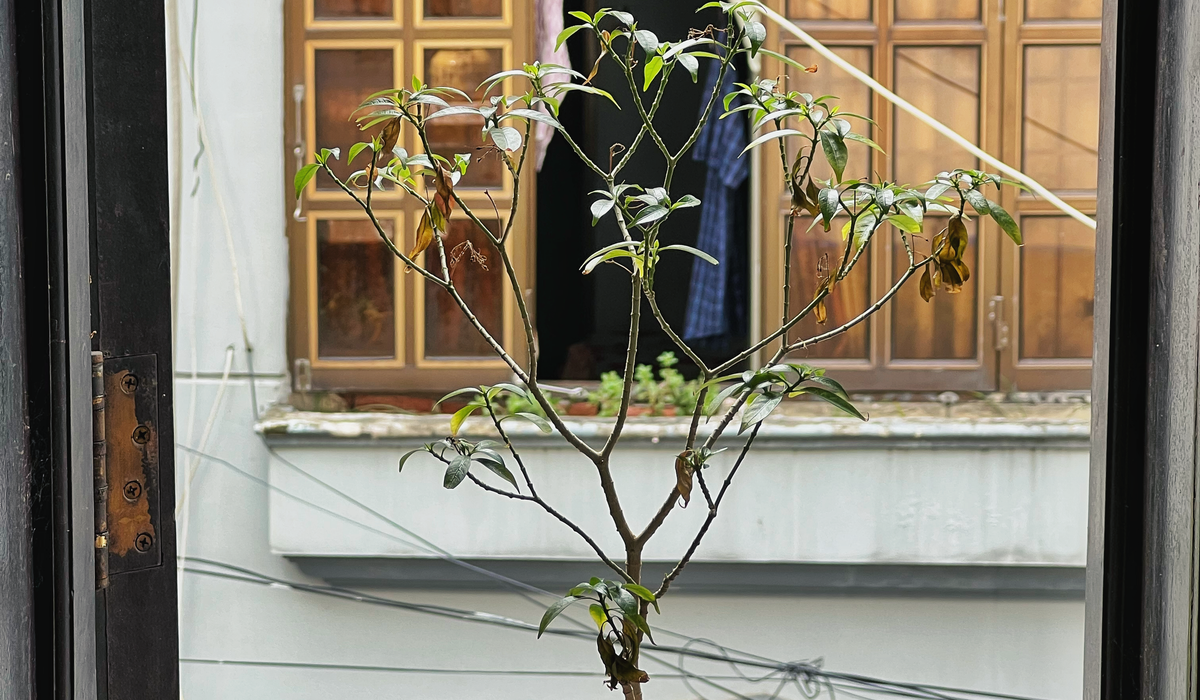
Most houseplant advice is written for bright, sunny rooms, which is not what many of us actually have. A north-facing sitting room, a flat shaded by a mature sycamore, a terraced house whose only window looks onto a narrow passage — these are all perfectly normal British growing conditions, and they are considerably dimmer than a windowsill in a magazine photograph. Add our short winter days, low sun angles and the heavy cloud cover we get from October onwards, and you have an environment where only genuinely shade-adapted plants will thrive. The good news is that there are more of them than you might expect.
Before spending anything, spend ten minutes working out what you have. Stand in the spot where the plant will live and look at the strongest shadow you can cast with your hand at midday. A shadow with crisp edges means bright light; a soft, fuzzy outline means medium; barely any shadow at all means low. Then think about direction: a window facing north receives no direct sun at any point in the year, whilst east and west windows give a few hours of gentle sun, and south-facing glass can be surprisingly fierce even in winter. Remember that light drops off dramatically with distance — a spot two metres back from a north window is roughly half as bright as the sill itself, and a hallway with no window at all will not support anything long-term.
These are the stalwarts I recommend most often, all of which will manage in a north-facing room provided they are not tucked into a dark corner:
If you have a slightly shaded south or west window rather than a full north-facing room, you can also try a parlour palm or a rubber plant, both of which appreciate a little more light than the group above.
Almost every struggling shade plant I see has been killed by kindness rather than darkness. In low light, plants photosynthesise slowly, which means they use far less water — often half, or even a third, of what the same plant would drink on a bright sill in June. Water only when the top two or three centimetres of compost feel dry to the touch, and be stricter still between November and February. Empty the saucer ten minutes after watering so the roots are never sitting in water. Feed sparingly too: a weak liquid feed once a month through spring and summer is plenty, and nothing at all over winter. If in doubt, wait another week.
You can improve a dim room without touching the electrics. Keep windows clean — grime on glass can cut light noticeably, especially on older sash windows. Pull heavy curtains right back during the day and swap solid blinds for something lighter if you can. Pale walls, a white ceiling and a mirror opposite the window all bounce light around a small room. Group plants together rather than scattering them; they raise humidity around each other and make the most of a single bright patch. Raise pots on a stand or a stack of books so foliage sits nearer window height instead of on the floor, and rotate each plant a quarter turn every week or two so it does not lean permanently towards the glass. Keep them clear of radiators, which dry the air and scorch leaves, and move them off cold windowsills on frosty nights.
Even the hardiest plant has limits. A windowless internal bathroom, a basement flat with one borrowed light, or a shelf more than three metres from any glass will defeat almost everything. Rather than watching a plant decline for months, treat that spot as somewhere for a lamp or a print and keep your greenery where it stands a chance. If you do want to push the boundaries, a small clip-on LED grow light costs very little to run and can transform a dark corner in a way no amount of plant selection can. Otherwise, give the brightest metre of your home to the plants. Matching the plant to the room, rather than the other way round, is the single most useful habit in small-space gardening.

The Garden Ledge An honest, everyday look at the things that make life a little better — with advice you can actually use.

The Garden Ledge An honest, everyday look at the things that make life a little better — with advice you can actually use.

Clearing spent crops, protecting pots and planting spring bulbs now will give your growing space a strong start next season.

Comments
ALina Kelian
19th May 2018 ReplyThe Garden Ledge No rushing, no fuss — just thoughtful notes and practical help, written by people who care. ullamco laboris nisi ut aliquip ex ea commodo consequat.
Rlex Kelian
19th May 2018 ReplyThe Garden Ledge Written for people who value the details, and want honest guidance they can trust. ullamco laboris nisi ut aliquip commodo.
Roboto Alex
21th May 2018 ReplyThe Garden Ledge Real stories, useful guides and the occasional recommendation, all in one calm corner of the web. ullamco laboris nisi ut aliquip ex ea commodo consequat.