

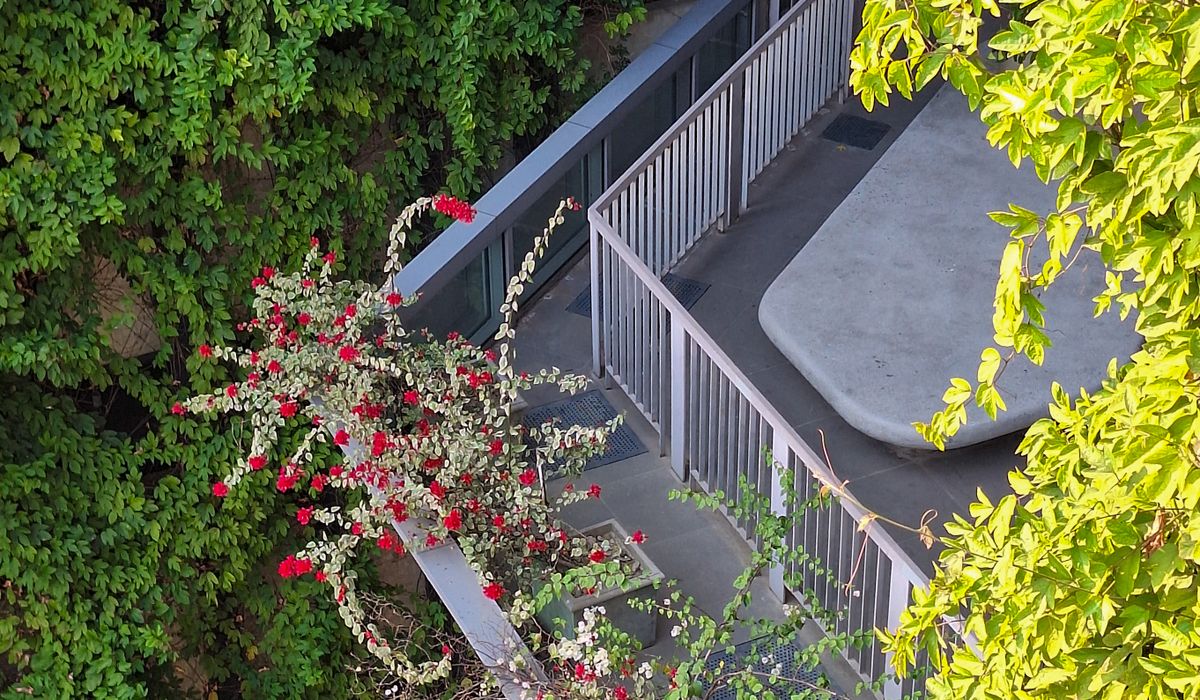
Most balconies fail as gardens because they are exposed. Wind rattles through, the sun bakes one side and never reaches the other, and there is rarely a handy border in which to plant anything. Climbing plants solve the hardest problem of all: being overlooked. A screen of foliage at eye level gives you privacy without turning the balcony into a box, because the leaves filter light and air rather than shutting them out.
Vertical growing also protects the floor space you actually want to use. A table, two chairs and a few pots still fit if the greenery is heading upwards. Choose deciduous climbers and you get a further benefit: dense cover in summer when the neighbours are out, and a bare frame in winter when you want every scrap of low, slanting British sunlight.
Your support should be decided before you buy a plant, because it dictates what will grow well and how much light you lose.
Trellis is the cheapest and most forgiving option. Choose rigid panels rather than flimsy expanding ones, with apertures of roughly 10–15cm. Smaller mesh looks busier but gives privacy faster and is easier for tendrils to grip. Wood weathers well; powder-coated metal lasts longer on a damp, wind-blasted balcony.
Tension wires are the discreet choice. Run three to five galvanised wires horizontally, spaced 30–40cm apart, tensioned between brackets with turnbuckles. They block almost no light, shrug off wind, and suit jasmine, clematis and small climbing roses. The trade-off is that twining plants need tying in until they establish a framework.
Screens give instant privacy while a climber fills in. Willow, hazel or bamboo rolls attached to the railing work well, as do slatted timber screens. Remember that a solid screen behaves like a sail on an upper floor, so fix it securely and never hang anything heavy from a glass balustrade.
Evergreen options for year-round screening include star jasmine (Trachelospermum jasminoides), which needs a sheltered, sunny spot and patience for its first year; ivy, which copes with shade but must be kept trimmed; and akebia, a vigorous semi-evergreen with scented spring flowers.
Deciduous and summer performers give faster results. Summer jasmine is quick, fragrant and happy in a sunny corner. Honeysuckle copes with north and east aspects and flowers for months. Clematis offers huge choice — group 3 viticella types are the easiest, flowering on new growth each summer and cut back hard in late winter. Passionflower is vigorous and exotic-looking in a warm spot, dying back in cold snaps. Solanum crispum 'Glasnevin' flowers generously into autumn.
Annuals cover a bare trellis in a single season: sweet peas for scent, black-eyed Susan for a warm wall, morning glory if you have real heat.
Balconies are often leasehold, and many leases and tenancy agreements restrict what you can drill into. Check before you reach for the hammer drill.
Give perennial climbers room: a container of at least 35–45cm diameter, larger for vigorous species. Use a good peat-free compost with added grit for drainage, and top it with a mulch to slow evaporation. Glazed or plastic pots hold moisture far better than terracotta, which dries out alarmingly fast in a breeze.
Watering is the real work. Balconies dry quickly, especially south-facing ones, and wind increases water loss from leaves. A self-watering reservoir saves daily trips in July. Feed with slow-release granules in spring, then a liquid tomato feed fortnightly from June.
Tie stems in early and often with soft ties in a figure-of-eight to avoid rubbing. In exposed spots, a low screen of reed or willow around the pot base shelters young growth without blocking your view.
The goal is dappled, not solid. Sparse foliage and open mesh let air move through, which reduces wind damage and keeps the balcony pleasant to sit on. A sealed wall of greenery traps damp air and invites fungal problems in both plants and washing.
Keep growth below the top of its support so it does not flop over the edge, and check whether anything overhanging a public pavement needs attention. If a shoot is heading for next door's balcony, a quick trim and a friendly word keeps everything sweet. Check too whether your building is listed or in a conservation area before fixing anything permanent.
Get the support right, choose plants to match your aspect, and a small, overlooked balcony becomes the most private spot in the flat — one you will actually want to sit in.

The Garden Ledge An honest, everyday look at the things that make life a little better — with advice you can actually use.

The Garden Ledge An honest, everyday look at the things that make life a little better — with advice you can actually use.

Loose-leaf salads sown in shallow trays provide quick pickings on a bright sill, even when the weather outside is cold.

Comments
ALina Kelian
19th May 2018 ReplyThe Garden Ledge No rushing, no fuss — just thoughtful notes and practical help, written by people who care. ullamco laboris nisi ut aliquip ex ea commodo consequat.
Rlex Kelian
19th May 2018 ReplyThe Garden Ledge Written for people who value the details, and want honest guidance they can trust. ullamco laboris nisi ut aliquip commodo.
Roboto Alex
21th May 2018 ReplyThe Garden Ledge Real stories, useful guides and the occasional recommendation, all in one calm corner of the web. ullamco laboris nisi ut aliquip ex ea commodo consequat.